In the United States and European Union, online products are typically sold only as a “for research use only” chemical, not as a supplement or drug. Because MOTS-c influences glucose metabolism, there is a theoretical concern about effects on blood sugar in people taking diabetes medications, which underscores the need for medical oversight. However, the absence of reported harm in mice is not the same as demonstrated safety in humans, especially over the long term or at supraphysiologic doses. Claims that MOTS-c can slow or reverse aging in people go well beyond what current evidence supports, and this information is provided for educational purposes only. These results are promising within their experimental context, but they should not be mistaken for evidence of clinical benefit in people. These findings position MOTS-c within the broader research effort to understand how mitochondrial signaling shapes whole-body energy balance.
Human studies that measure naturally occurring MOTS-c levels are observational and do not show that administering learn about purchasing KLOW 80 synthetic MOTS-c produces weight loss. Those findings support a metabolic research hypothesis, not a demonstrated weight-loss treatment. Observing a peptide change after exercise does not show that injecting synthetic peptide reproduces exercise or its health effects.
Beginning in approximately 2003, the discovery of small open reading frames encoding short peptides with signaling roles—known as mitochondrially derived peptides (MDPs)—in mtDNA was made by researchers, starting with humanin. More than most peptides available online, ARA-290 boasts five published trials conducted on human subjects. Only the pediatric and diagnostic doses were indicated on the labels. Those low doses were still tested in one randomized trial that focused on dose-ranging.
These are animal and cell findings, and none of them has been shown in humans . MOTS-c is a 16-amino-acid peptide encoded by a short open reading frame within the mitochondrial 12S rRNA gene . A science-based ranking of GLP-1 agonists, growth-hormone secretagogues, and metabolic peptides — what the evidence actually shows, and what remains experimental. MOTS-c is not approved by the FDA or EMA, and online products are sold as research chemicals. However, there are no large published human clinical trials confirming these benefits in people. Those molecules are approved drugs with extensive human clinical trial data behind their use in diabetes and obesity, whereas MOTS-c remains investigational with no comparable human evidence.
What Is MOTS-c? A Mitochondrial Derived Peptide
Under metabolic stress, MOTS-c moved from the cytoplasm into the nucleus and changed nuclear gene expression, including genes for antioxidant defenses and cellular stress responses. AMP-activated protein kinase is a nutrient and cellular energy sensor that maintains energy homeostasis, raising glucose uptake and fatty acid oxidation when energy production falls short. No peer-reviewed trial giving MOTS-c to people has been published. The MOTS-c benefits discussed online (better insulin sensitivity, less weight gain, more exercise capacity and healthy aging) come from mouse and cell studies.
MOTS-C is a naturally occurring 16-amino acid peptide encoded by mitochondrial DNA (12S rRNA gene), not nuclear DNA. However, human clinical trial data remains limited, so long-term safety in humans has not been fully established. This contributes to its generally favorable safety profile compared to synthetic compounds. MOTS-C is an endogenous peptide — your body naturally produces it. A 2019 study (Kim et al.) demonstrated that MOTS-C treatment in aged mice improved skeletal muscle metabolism and physical capacity, suggesting it can counteract aspects of age-related metabolic decline.
These peptides travel to the cell nucleus during metabolic stress and tell the nucleus to change which genes it activates. Until then, textbooks said the mitochondrial genome encoded 13 electron-transport-chain protein subunits plus tRNAs and rRNAs. The 12S rRNA region of the mitochondrial genome encodes it. Become part of our vibrant community by sharing your findings and experiences with our research peptides.
Study showing MOTS-c levels increase with exercise and administration improves physical capacity in aged mice. Study examining combinatorial effects of MOTS-c and NR on NAD+ levels, sirtuin activation, and metabolic improvements in aged mice. Study comparing MOTS-c treatment versus voluntary exercise in sedentary aged mice, measuring metabolic and physical function improvements.
While both are mitochondrial-derived peptides encoded within the mitochondrial genome, MOTS-c and humanin differ in sequence, size, receptor targets, and primary biological activities. Exogenous MOTS-c administration has been shown to improve physical performance in aged mice, though it should not be considered a replacement for exercise — it appears to capture specific metabolic aspects of the exercise response rather than the full spectrum of exercise adaptations. Human clinical data supporting specific health benefits remains limited, and MOTS-c is not approved for any medical use. Subcutaneous and intravenous administration routes have not been systematically compared for bioavailability or efficacy.
Enhanced glucose uptake in muscle and adipose tissue, combined with reduced hepatic glucose output, results in better systemic glucose regulation. Remarkably, MOTS-c travels from mitochondria to the cell nucleus under metabolic stress, where it directly regulates gene expression. MOTS-c’s discovery revealed that mitochondria also produce peptide hormones that travel through the bloodstream and regulate metabolism throughout the body. For decades, mitochondria were understood primarily as cellular powerhouses—organelles that produce ATP through oxidative phosphorylation.
RouteSubcutaneous injection (under the skin) is the format used in animal studies and reported research planning. MOTS-c is short for mitochondrial open reading frame of the 12S rRNA-c. It is not an established, clinically validated substitute for exercise, and no human trial has demonstrated that MOTS-c reproduces exercise’s benefits on its own. In research, MOTS-c has been studied for its role in metabolic regulation — particularly insulin sensitivity, glucose uptake into muscle, and body-weight regulation in animal models.
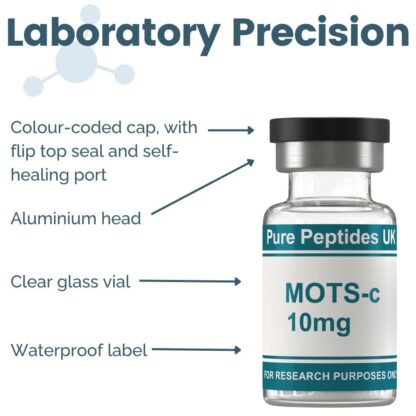
That makes it one of the mitochondrial derived peptides (MDPs), a small family of mitochondrial peptides encoded by the mitochondrial genome. GLUT4 is a glucose transporter that is responsible for glucose uptake in the skeletal muscle and adipose tissues. MOTS-C (Mitochondrial Open Reading Frame of the Twelve S rRNA Type-C) is a 16-amino acid peptide encoded by the mitochondrial genome. A 2019 study found circulating MOTS-c was 2.5-fold lower in elderly subjects (ages 70-81) compared to young adults (20-35).
Humanin is a 24-amino acid peptide primarily studied for neuroprotective effects (Alzheimer’s disease, neuronal survival). It is also proposed to promote mitochondrial biogenesis, potentially improving the very organelles that produce it. The gap between animal study doses and commonly used human doses is notable. The effect appears to be insulin-independent, meaning MOTS-C promotes glucose uptake even when insulin signaling is impaired.