Vendors in the mid-market sector provide a combination of affordability and quality by maintaining competitive pricing and offering testing documentation. Higher prices are usually charged by these suppliers, which correspond to their investment in quality management systems. Available documentation (community reports), and systematic evaluation criteria relevant to any peptide supplier are utilized in the analysis. Most protocols run 8-12 weeks, followed by 4-8 weeks off. The adjustment of dose ratios is facilitated by individual peptides; sources within the community indicate that this preference is common when using fewer than all four components.
Cumulative benefits of consistent dosing become apparent, with users reporting significant improvements in their primary goals. Healing protocols may show accelerated progress, with users reporting faster resolution of injuries compared to previous experiences. Adding multiple additional compounds creates complexity that makes it impossible to identify what is working (or causing problems). If you cannot commit to daily administration, consider protocols that explicitly include off days , like 5 days on, 2 days off,. Always start at the lower end of the dosing range and titrate upward.
Channel Price Details Source Better Med Spa , standard protocol, $400/4 wks; $690/8 wks Lincoln Park, Chicago, or telehealth anywhere in Illinois; general recovery, gut support, inflammation; 8-week option saves $110 Better Med Spa Better Med Spa (injury protocol) $600/4 wks; $1,040/8 wks Higher-dose protocol for acute injury or post-surgical recovery; 8-week option saves $160 Better Med Spa Hormone Treatment Centers (Overland Park, KS; Lee’s Summit, MO) Contact for pricing Page describes the KLOW protocol as GLOW plus KPV; phone consultation required Hormone Treatment Centers BeyondMD (BPC-157/KPV/TB-500 injectable, no GHK-Cu) From $199/mo Three of KLOW’s four peptides; price shown before the provider evaluation BeyondMD For the six PCAC-recommended peptides together, see Post-PCAC 503A peptide pricing 2026, and for the three-peptide base see GLOW blend pricing. Each price shows the date the provider’s sticker price was verified. We average every cost to a standard 3-month protocol (which our medical advisors consider the best basis for comparing cost and value), and the total folds in any one-time consult or provider-review fee and three months of membership. Products sold outside the licensed pharmacy system are not verified for identity, purity, or sterility. Get one email when a verified provider’s Klow , GHK-Cu / BPC-157 / TB-500 / KPV, price drops or a safety flag is raised.
Together — they address “leaky gut” by reducing inflammation and repairing damaged intestinal lining at the same time. A properly verified research compound gets you results. If you’re sourcing KLOW for any of these applications — quality matters more than price.
Once reconstituted, refrigerated storage between 2°C and 8°C is standard practice and the solution is treated as short-lived. Blinding of outcome scoring matters most for subjective endpoints such as histology grading and wound measurement, where unblinded assessment reliably inflates effect size.
Redox-active metal can also catalyze oxidation of susceptible residues, a consideration when assessing stability of the mixture over time. The complex carries a characteristic blue color in solution, and the copper is held in a defined coordination geometry whose stability depends on pH and on competing chelators in the surrounding buffer. Inflammation studies typically quantify cytokines such as TNF-alpha, IL-6 and IL-1beta in culture supernatants or tissue homogenates, often paired with NF-kB nuclear translocation assays or reporter constructs. Background on the compounds is collected in the history overview, the beginners guide, and the multi-peptide synergy discussion.
The pricing framework for Klow Peptides.
A percentage with no method and no date is a number somebody typed — and a certificate that carries every test but for a different lot number than the vial is the most common failure of all and the easiest to catch. A mass spectrum of the vial therefore shows 4 separate masses, and a certificate that reports one number for the whole vial has not identified anything. Save my name, email, and website in this browser for the next time I comment.
KPV: The Anti-Inflammatory Tripeptide
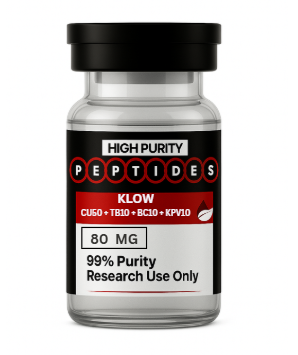
Endotoxin and microbial reports may matter for workflows where contamination control affects the research design. The practical benchmark is therefore a documented, date-stamped comparison. For general context on how service-based healthcare pricing can include costs beyond the headline amount, review this explanation of concierge medicine hidden expenses. Searchers sometimes compare research material with supervised clinical services or broader wellness programs. These calculations are derived from advertised prices and labeled mass — not verified manufacturing costs. One listing calculates $1.81 per labeled milligram for a $144.99 (80 mg vial), while another reports $1.91 per nominal milligram for a $153 vial.
Fatigue is paradoxically common despite KPV and GHK-Cu having energizing properties for many users. Rotating injection sites and allowing the solution to warm before injecting reduces occurrence. These reactions are more common with cold injections or when the same site is used repeatedly. Redness, swelling, itching, or bruising at the injection site typically resolve within a few hours to a day. For practical purposes, calculate how long a vial will last based on your dosing protocol and reconstitute accordingly. After this period, peptide degradation may reduce potency even if the solution appears clear.
KLOW sits at the outer edge of what peptide research can currently support, which is why community reports are added as a separate grade to understand what benefits people using Klow have experienced. It is not medical advice — and nothing here endorses buying or self-administering unapproved substances. Buying the four peptides separately typically runs $200 to $320, which is the blend’s actual selling point. GHK-Cu contains copper, so a prepared solution often looks blue. Compounded by a licensed U.S. 503A compounding pharmacy under a patient-specific prescription. BPC-157 is prohibited under WADA category S0 (non-approved substances) and thymosin beta-4 derivatives including TB-500 are prohibited under S2.

Online photos are individual reports that cannot separate the blend’s effect from lighting — other treatments or selection bias. For the other compounds, the general peptide calculator covers the same arithmetic. The figures below are simply what the research literature reports for each individual peptide — shared for educational context only. No controlled human trial has ever measured the side effects of this specific four peptide blend — so there is no verified adverse event list for Klow itself. There are no clinical photos, no measured timeline and no controlled comparison for the combination of BPC-157, TB-500, GHK-Cu and KPV. Market evolution may shift optimal vendor selection over time.